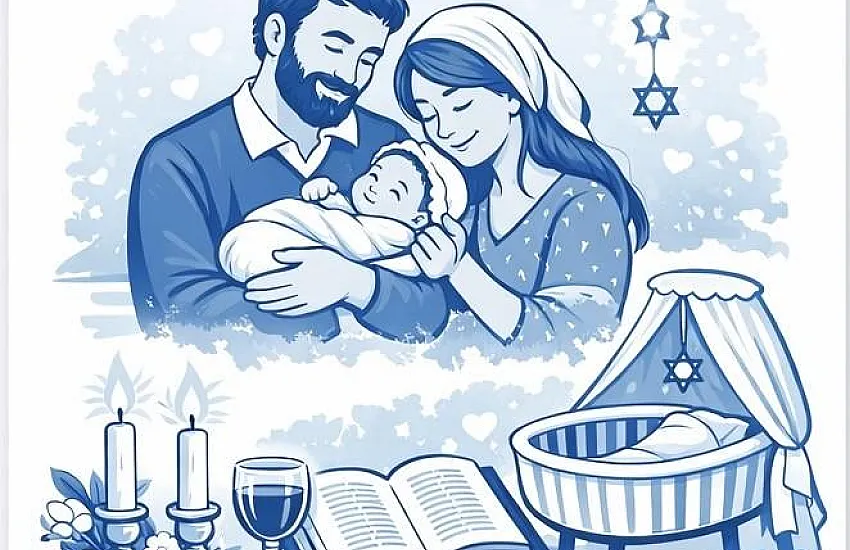
The birth of a child is one of the most important events in the life of every family. In cultures and religions based on a strong sense of community, the arrival of a new member of society has not only personal significance but also social and spiritual significance. In Judaism, the birth of a child is associated with rich symbolism and numerous rituals aimed at integrating the newborn into the religious community.
Childbirth in Judaism – Tradition, Symbolism, and Community
Today I invite you to learn about selected customs and traditions accompanying the birth of a child in Judaism – both a boy and a girl.
A Woman After Childbirth – Ritual Significance
In Jewish tradition, a woman after childbirth is in a state of ritual "impurity" (Hebrew: tame). It is worth emphasizing that this has nothing to do with a lack of physical or moral purity. It is a strictly religious concept, referring to the spiritual realm and ritual balance.
This state lasts:
• 7 days after the birth of a boy,
• 14 days after the birth of a girl.
During this time, a woman should not touch men, even her own sons (with the exception of a newborn). Importantly, women are not allowed to fast during the postpartum period – caring for the health of the mother and child is of paramount importance in Judaism.
"Shalom Zachar" – Welcoming a New Member of the Community
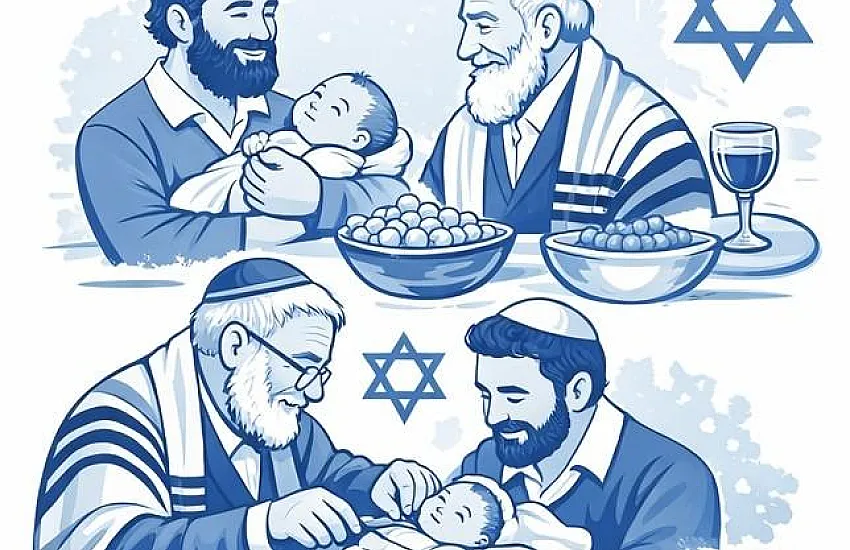
The birth of a boy is celebrated in a special way in Judaism. On the first Friday evening after his birth, the ceremony of Shalom Zachar, or "welcoming a man," takes place. Interestingly, the boy does not yet have a name at that time.
Relatives, friends, and neighbors participate – the community gathers to celebrate. A simple snack is served, usually consisting of chickpeas, lentils, or peas. The round shape of the grains symbolizes the cycle of life and its beginning.
Circumcision – a sign of the covenant
One of the most important rituals in a Jewish boy's life is circumcision (brit milah). According to tradition, it should take place on the eighth day of life, provided the child's health allows it.
Circumcision is:
• a sign of Abraham's covenant with God,
• an act of symbolically entrusting the child to God's care,
• an incorporation of the boy into the religious community.
The ceremony begins with prayers. Then, a specially appointed person – the kuma (Yiddish: quaternion) – brings the child to the ceremony site. This may be a home, a synagogue, or – especially in Israel – a hospital room.
Those gathered greet the child with the words "mazal tov," wishing him happiness and prosperity. The circumcision is performed by a mohel – a person with appropriate religious and practical qualifications. After the ritual, the child is given a name, often in memory of a close family member.
Exceptional Situations – Health Above All
Judaism places great importance on the protection of life and health. If the child is not completely healthy (e.g., severe jaundice), circumcision is postponed.
In cases of serious contraindications, such as hemophilia, the procedure is not performed at all, yet the boy is considered a full member of the community. If the child is born without a foreskin or with a very small foreskin, only a symbolic drop of blood is drawn.
The Birth of a Girl – More Modest, but with Joy
The birth of a girl is celebrated in a more intimate manner. On the first Saturday after the birth, during the Shabbat service, the father announces his daughter's name. After prayers, he invites family and friends for a light meal. Although the setting is more modest than for a boy, the event still has a joyful and communal character.
The customs surrounding the birth of a child in Judaism demonstrate the importance of continuity of tradition, the role of community, and the symbolic introduction of a new life into the world of religious values.
These are not just rituals but also moments that build interpersonal bonds and cultural identity.